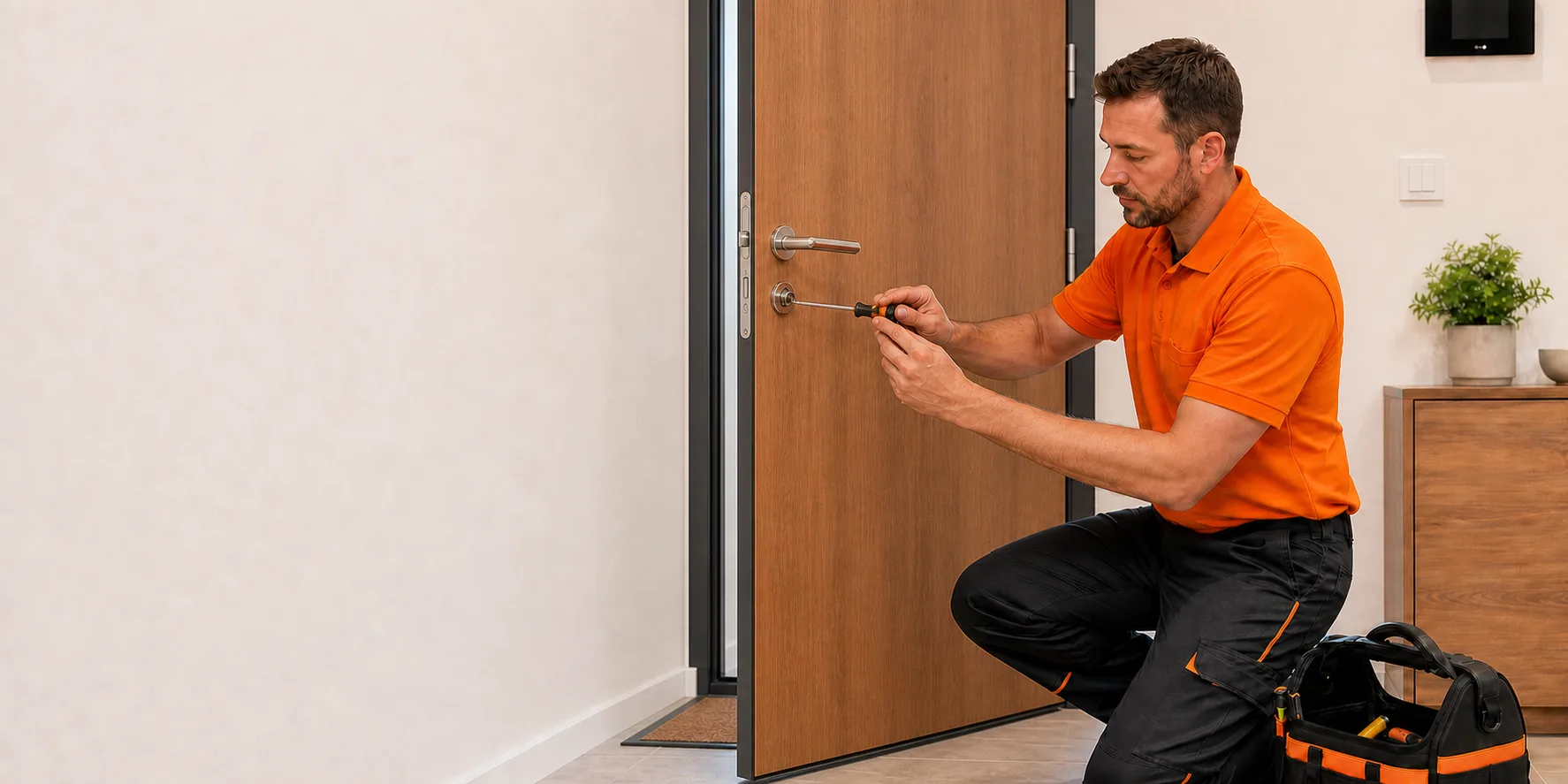
When a key breaks inside a lock, the first instinct is often to remove it immediately. Forcing the fragment deeper, bending the cylinder pins or damaging the door mechanism can make the repair more expensive. The right response depends on whether the door is open or closed, the key position and the condition of the cylinder. For a technical inspection, contact our locksmith service.
A key usually fails after the metal has weakened over time. A bent, cracked or heavily worn key may no longer tolerate the turning force. Rust, dirt inside the keyway, a stiff cylinder and a poorly cut duplicate also increase the risk.
If the door presses against the frame, the latch or multipoint mechanism remains under tension. The user then applies more force to the key. Freezing weather, door misalignment and an aging cylinder can create the same result.
If the door is locked and a child, elderly person or urgent situation is involved, mention it when requesting service. Describing the lock and fragment position helps the locksmith bring the right tools.
Needles, nails, knives, screwdrivers and unsuitable pliers often push the fragment farther inward. They can scratch the keyway, bend internal pins and prevent a good key from working later.
Applying glue to the broken key is especially risky because it can spread inside the cylinder and ruin an otherwise repairable lock. Excess oil and random chemicals attract dirt or harm plastic components. Drilling the lock or damaging the door should only be considered by a professional when no safer method remains.
You can explore other repair and maintenance services on the 166 Usta homepage.
With the door open, there is usually less load on the cylinder and locking mechanism. This makes fragment removal and testing easier, although the wrong tool can still damage the cylinder.
With the door closed, the latch, cylinder and multipoint system may all be under tension. Pushing the door and continuing to turn the key can worsen the fault. A locksmith first reduces this tension, then chooses an extraction method based on the fragment position.
The locksmith checks the angle of the break, the depth of the fragment and whether the cylinder can move. A suitable extraction tool removes the piece without adding pressure to the pins. The cylinder, latch, handle and door alignment are then tested.
If the lock is sound, cleaning, suitable lubrication and adjustment may be enough. If the keyway is damaged or the mechanism is worn, a compatible cylinder or component is fitted. The aim is to preserve the door and replace only what is necessary.
Not every broken-key incident requires a new lock. If the fragment comes out cleanly, the cylinder turns normally and the pins are undamaged, the lock may remain serviceable. Replacement is more reliable when the cylinder stays stiff, spins freely or the door still fails to lock.
If part of the key is missing and security is a concern, a new cylinder and key set may be advisable. Compatibility is particularly important with multipoint and high-security doors.
Stop using bent, cracked or worn keys and obtain a good-quality duplicate. If a key becomes difficult to turn, do not apply more force; have the lock and door alignment checked. A sagging door or one rubbing the frame should be adjusted promptly.
166 Usta locksmiths remove broken keys with suitable tools, identify why the lock became stiff and test security before recommending repair or replacement. If a key has broken inside your lock, contact 166 Usta for a solution without putting the door at further risk.
To arrange help from our locksmith service, call +994 50 274 92 92 or +994 10 123 01 66, or use our contact page. Describe the problem and provide your address so we can clarify the work and a suitable appointment time.