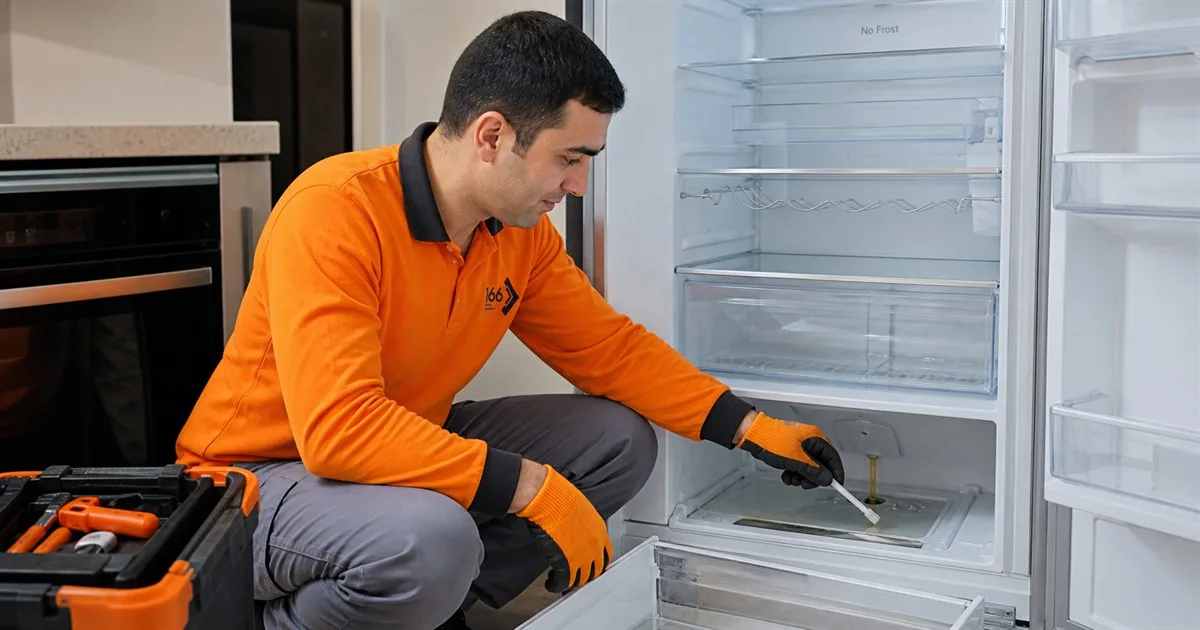
Water inside a No-Frost refrigerator can be confusing because these models use automatic defrosting. When the drain path for melted water is clogged, moisture stays inside, odor appears, and hidden ice may grow behind the panel. For a technical inspection, contact our refrigerator technician.
The most typical sign is water under lower shelves or beneath the vegetable drawer. Sometimes the water is not obvious at first, but the refrigerator smells damp, ice appears on the rear panel, or the fan sound changes. Because the issue can come and go, it is often noticed late.
During defrost, melted water should flow through a small channel into an evaporation tray. If the channel is blocked by food particles, ice, dust, or sticky residue, water remains in the cabinet. This affects hygiene and cooling performance.
A clogged drain is less common than a loose gasket, so users may confuse it with refrigerant loss or door seal problems. The location and timing of water are important clues: water appearing after defrost points toward the drain path.
If ignored, the blockage can cause odor, hidden ice, and fan noise when ice reaches moving parts. Wiping the water only removes the symptom. The drainage path must be checked and cleared correctly.
You can wipe visible water, check that food is not blocking rear air channels, and observe whether the odor returns. Do not push hard wire, needles, or sharp tools into the drain because plastic channels and evaporator parts can be damaged.
You can explore other repair and maintenance services on the 166 Usta homepage.
If water returns, a technician should clean the drain safely and inspect the defrost area. 166 Usta focuses on the cause so the same moisture problem does not keep coming back.
A 166 Usta technician checks the drain channel, defrost system, fan area, and water tray. The goal is to restore normal moisture flow and keep cooling stable.
If your No-Frost refrigerator has water, odor, or hidden ice, request refrigerator service before the issue spreads.
This section does more than name the problem; it explains how the issue affects daily refrigerator operation. The same symptom can come from a gasket, airflow, sensor, fan, or compressor circuit, so careful observation matters. The user can check safe external signs, but electrical and sealed cooling parts should not be handled without service tools.
Professional diagnosis checks more than whether the refrigerator runs. A technician reviews temperature behavior, door alignment, airflow channels, fan sound, compressor startup, and control components in a logical order. This matters because replacing a random part can waste time and leave the real issue unresolved.
With 166 Usta, the process starts with safe visual inspection and symptom review, then moves to measurements where needed. The benefit for the customer is clarity: the problem is not left as a vague “not cooling” complaint, but explained as a specific cause with a practical next step.
To arrange help from our refrigerator technician, call +994 50 274 92 92 or +994 10 123 01 66, or use our contact page. Describe the problem and provide your address so we can clarify the work and a suitable appointment time.