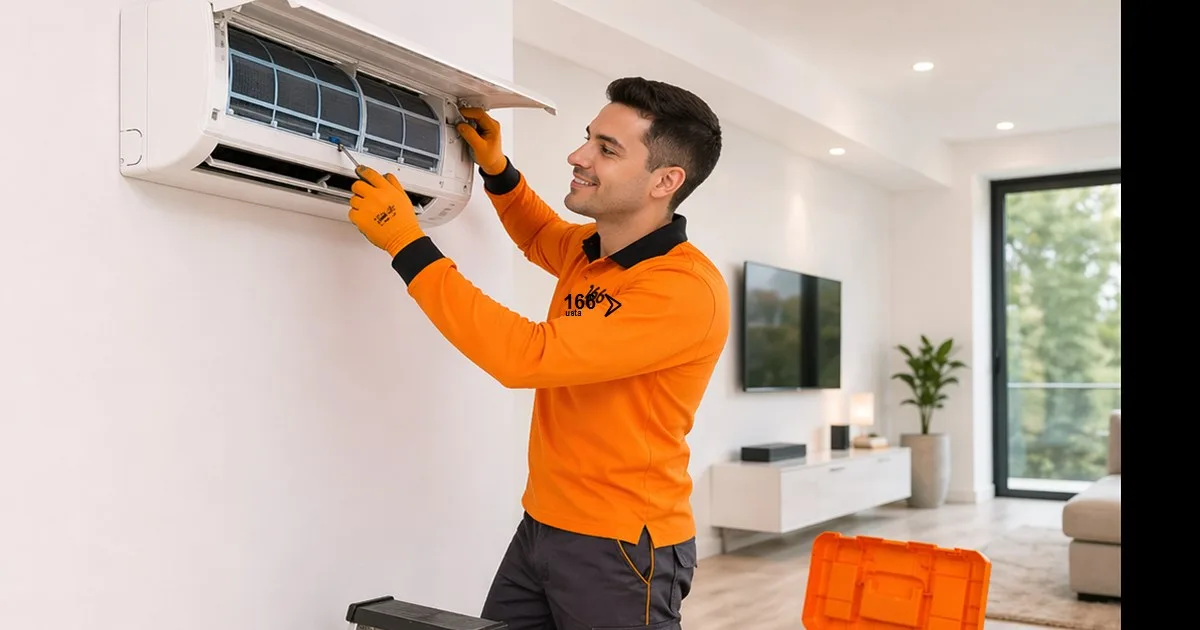
A light fan sound is normal, but strong vibration, metal rattling, rubbing, or resonance through the wall should be checked. Noise can come from the indoor unit or outdoor unit, and the cause is often related to mounting, fan balance, loose panels, worn vibration pads, or the outdoor unit’s position. For a technical inspection, contact our air conditioner technician.
Ignoring vibration is not a good idea. What starts as an annoying sound can loosen brackets, damage casing parts, and create resonance that is heard in nearby rooms. Finding the exact source of the noise is the first step toward a correct repair.
The problem is often most noticeable when the system starts. The outdoor unit may transfer vibration to the wall or balcony, while the indoor unit may rattle around the cover, filter, or airflow flap. Sometimes the sound appears only at a certain fan speed, which can point to balance or loose-part issues.
Observing where the sound comes from is useful, but touching moving fan parts or outdoor mounting areas while the unit is running can be unsafe.
You can explore other repair and maintenance services on the 166 Usta homepage.
If outdoor-unit brackets are loose or rubber vibration pads are worn, normal compressor and fan operation can transfer too much vibration to the wall. A weak mounting surface or incorrect installation can also make the sound worse over time.
Inside the room, a loose cover, filter, airflow flap, or plastic casing part can create rattling. Dirt on fan blades may disturb balance and cause humming. In some cases, the drain line or casing contact points can also create resonance.
You can observe whether the sound comes from the indoor or outdoor unit, whether it changes with fan speed, and whether it happens at startup or during continuous operation. You can also check that the indoor cover is closed and that no loose object nearby is vibrating.
Do not tighten outdoor-unit bolts, touch fan blades, open casing panels, or work near balcony-mounted units yourself. Outdoor AC work can involve height, electrical, and mechanical risks, so it should be handled safely.
Call an air conditioner technician if vibration travels through the wall, metal noise appears, the fan seems to rub, or the sound gets worse each day. A technician checks mounting brackets, vibration pads, fan balance, casing parts, and outdoor-unit placement.
To arrange help from our air conditioner technician, call +994 50 274 92 92 or +994 10 123 01 66, or use our contact page. Describe the problem and provide your address so we can clarify the work and a suitable appointment time.