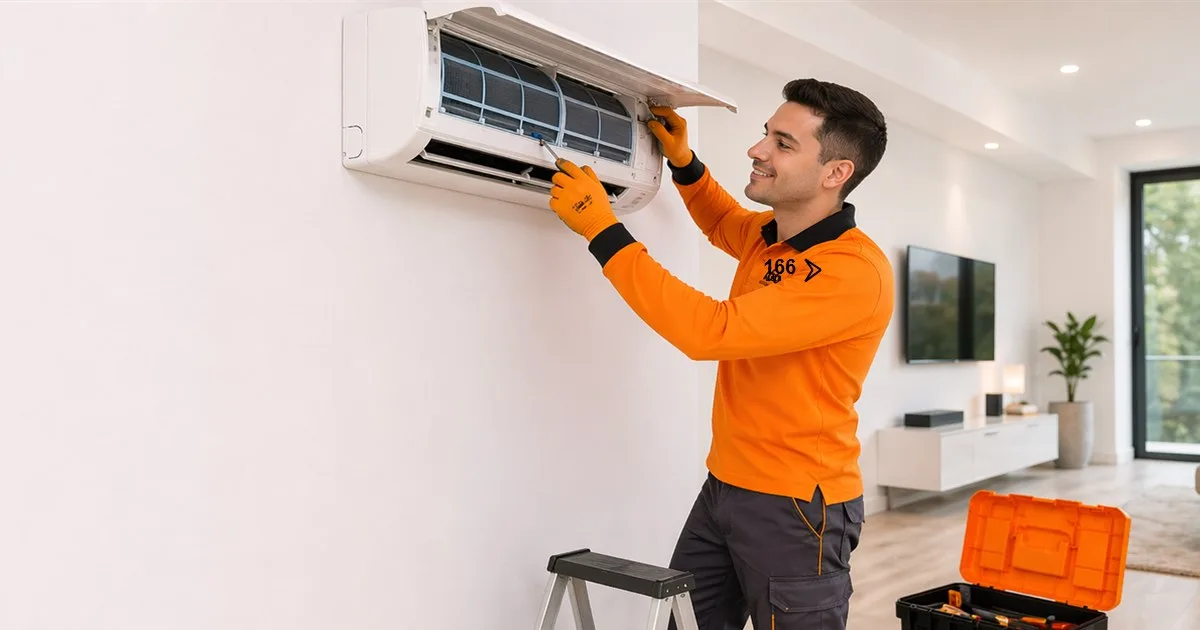
When an air conditioner runs but the room still feels warm, the cause is not always “low refrigerant”. Weak cooling can come from restricted airflow, dirty coils, poor outdoor-unit ventilation, drainage-related icing, sensor problems, or a pressure imbalance in the refrigerant circuit. During Baku’s hot season, a small maintenance issue becomes noticeable faster because the system works for many hours each day. For a technical inspection, contact our air conditioner technician.
This guide explains what weak cooling looks like, which checks are safe at home, and when a professional air conditioner technician should diagnose the unit. The goal is to avoid guesswork, because simply adding refrigerant without checking the cause may leave the real problem unresolved.
Weak cooling often develops gradually. At first the room takes longer to cool, then the unit starts running almost continuously, and eventually the selected temperature on the remote no longer matches the real comfort level. Rooms with direct sunlight, poor insulation, or heat from kitchen areas may show the problem earlier.
These signs can look similar, but they do not always have the same cause. Weak airflow may point to filters or coils, while strong airflow with little cooling may require pressure, sensor, or outdoor-unit checks.
You can explore other repair and maintenance services on the 166 Usta homepage.
Dusty filters and dirty indoor coils are among the most common causes. When dust blocks airflow, cold air cannot circulate properly and the system works harder. If maintenance has been skipped for a long time, washing the removable filter alone may not be enough because dirt can remain deeper inside the indoor unit.
Another possible cause is refrigerant leakage or incorrect system pressure. A technician should check for leak signs, pipe connections, temperature difference, outdoor-unit operation, and compressor behavior before adding refrigerant. Poor ventilation around the outdoor unit can also reduce performance, especially when the unit is exposed to strong sun and dust.
You can confirm that the remote is set to cooling mode, the temperature is not set too high, and the fan speed is not unnecessarily low. You can also remove and inspect the washable filter. If you clean it, let it dry fully before reinstalling it to avoid odors and moisture buildup.
It is also useful to look at the outdoor unit from a safe position and check whether airflow is blocked. Do not open electrical covers, handle copper pipes, tighten refrigerant connections, or add gas yourself. Those steps require proper tools and can damage the system if done incorrectly.
If cooling does not improve after basic checks, or if you see ice, water leaks, unusual noise, or irregular outdoor-unit operation, the system needs professional diagnostics. Waiting can increase compressor load, raise electricity use, and turn a small fault into a more expensive repair.
To arrange help from our air conditioner technician, call +994 50 274 92 92 or +994 10 123 01 66, or use our contact page. Describe the problem and provide your address so we can clarify the work and a suitable appointment time.