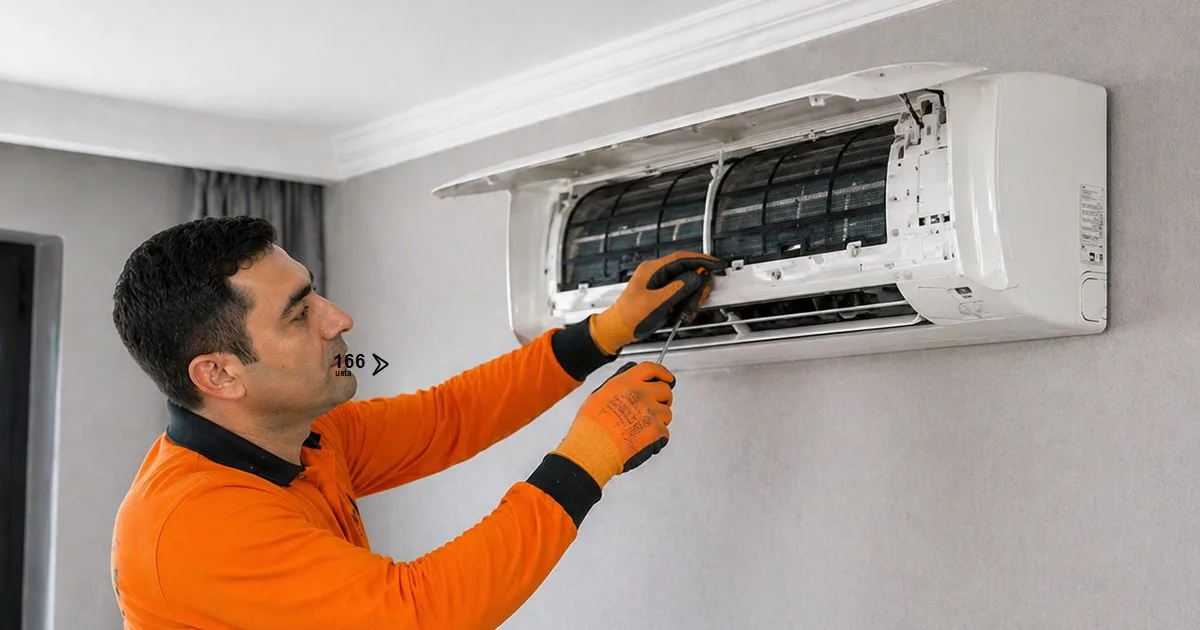
Water leaking from an indoor split AC unit should never be treated as a normal side effect of cooling. Condensation should collect inside the unit and leave through the drain line. If it drips into the room, the drain may be blocked, the unit may be installed at the wrong slope, or ice may be forming and melting inside the coil area. For a technical inspection, contact our air conditioner technician.
Ignoring the leak can damage paint, furniture, flooring, and nearby electrical points. The first step is to stop the unit, protect the area below it, and understand whether the leak is occasional or repeated. If it comes back, an air conditioner technician should inspect the drain and indoor unit.
The most obvious sign is dripping from one side of the indoor unit. Sometimes the water appears only after the AC has been running for a while because condensate collects inside before overflowing. Damp stains on the wall, bubbling paint, or a musty smell near curtains may also point to a hidden leak.
These symptoms can come from a blocked drain, but they can also be caused by icing and poor airflow. Wiping the water away does not solve the cause; the reason water returns into the room must be found.
You can explore other repair and maintenance services on the 166 Usta homepage.
The condensate drain line can become blocked with dust, slime, and mold. If the pipe is bent, crushed, or sloped incorrectly, water cannot leave the indoor unit fast enough. In older or rarely serviced systems, dirt can also collect in the drain tray itself.
Dirty filters can reduce airflow and make the indoor coil too cold. When ice forms and later melts, the amount of water may overflow the tray. Refrigerant pressure issues, fan problems, and sensor faults can also contribute to icing and repeated water leakage.
Turn the AC off, protect the wall and floor, and check whether the removable filter is very dirty. Try to observe where the water comes from: the side of the unit, the bottom edge, the wall, or the drain outlet. This information helps the technician diagnose the issue faster.
Do not pour chemicals into the unit, force the drain tray open, push sharp objects into the drain line, or open electrical covers. These actions can damage plastic parts, worsen the leak, or create an electrical hazard.
If the leak repeats, the wall is wet, cooling is weak, or the drain line is hidden inside the wall, professional service is needed. A technician checks the drain line, indoor-unit slope, filters, coil condition, and whether icing is part of the problem.
To arrange help from our air conditioner technician, call +994 50 274 92 92 or +994 10 123 01 66, or use our contact page. Describe the problem and provide your address so we can clarify the work and a suitable appointment time.